GTA Spring Market Heats Up: Multiple Offers Return as Listings Drop 18%
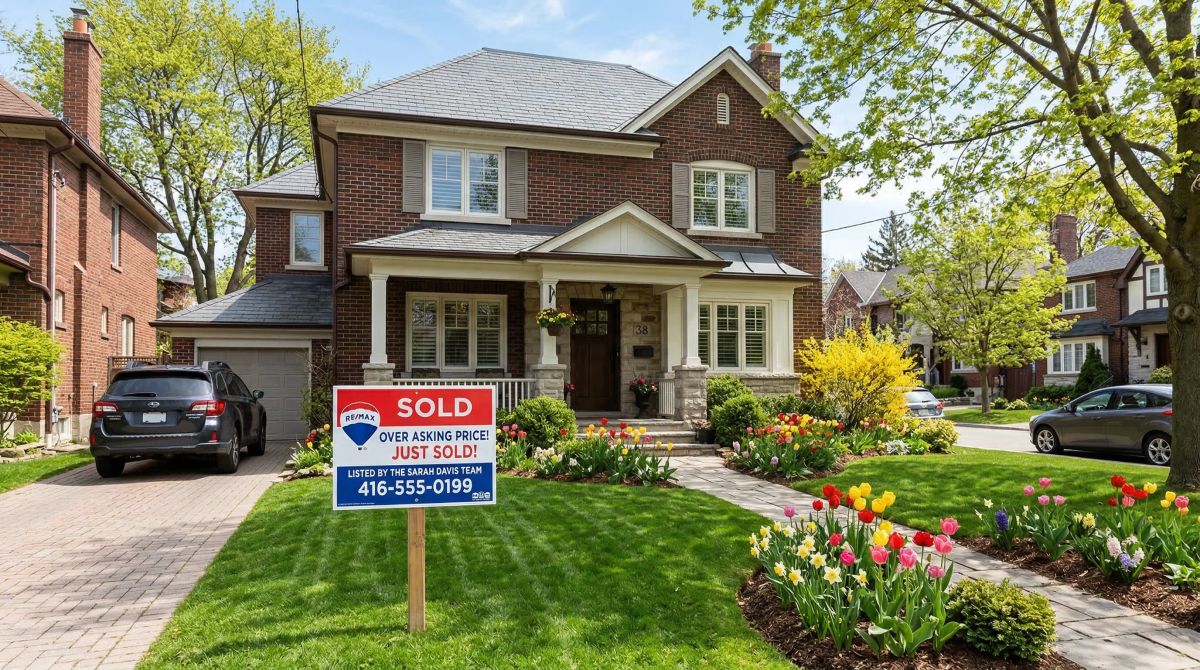
New listings are down 18% year-over-year in the GTA, and well-priced homes are drawing multiple offers again. Here's what the February 2026 data really means.
The Setup Heading Into Spring
Something shifted in the GTA housing market over the past few weeks, and it's happening quietly enough that a lot of buyers haven't noticed yet. New listings are down roughly 18% compared to this time last year, according to agents tracking February's data closely. Sales are still below year-ago levels — but the gap between supply and demand is narrowing, and in specific pockets of the city, that tightening is already showing up at offer tables.
February 2026 recorded 3,868 sales across the GTA, down about 4.2% from February 2025 but up a substantial 25.5% from January 2026. The average sale price came in at $1,008,968 — a 7% decline year-over-year, but also a recovery back above the $1 million mark after dipping below it in January. That month-over-month bounce tells you something: buyers who were sitting on the sidelines didn't vanish. They were waiting.
Where Multiple Offers Are Actually Happening
Not every neighbourhood is seeing competition. This isn't 2021. But in the $800,000 to $1.4 million detached and semi-detached range, rate relief from the Bank of Canada's cutting cycle has meaningfully expanded what buyers can qualify for — and that's where activity is picking up fastest.
Vaughan is a good example of what's changing on the ground. Average days on market dropped from 27 to 22 in the most recent week tracked, and the sell-to-list ratio improved to 98% — up from 97% the week prior and well above the 90-91% range seen just weeks earlier. Sellers in Vaughan who had been overpricing their homes are adjusting, and when they price correctly, buyers are showing up. That gap between what sellers wanted and what buyers would pay has been the story of the past year. It's closing.
In Markham, detached home sales hit 69 transactions in February — up 8% month-over-month and 10% higher than February 2025, according to data from the RE/MAX Benczik Kavanagh team. The average price for a detached home in Markham sat at roughly $1.5 million, up 3% month-over-month, though still down about 11% year-over-year. York Region as a whole is moving toward something closer to equilibrium, with months of inventory at 6.26 — still technically a buyer's market, but no longer the deep-freeze conditions of late 2024.
The Condo Situation Is a Different Story
The GTA is really two markets right now. Ground-level homes in desirable areas are seeing a real shift in activity. Condos, on the other hand, remain soft — and that softness is unlikely to reverse quickly.
Condo apartments averaged $626,650 in February 2026, down 8.9% year-over-year, with 1,088 sales — still 11.2% below February 2025 levels. Pre-sale condo buyers are dealing with elevated carrying costs on contracts they signed during the boom years, and some projects have faced delays or cancellations. The purpose-built rental sector is drawing institutional money, but that doesn't help the resale condo market, where listings continue to pile up.
At the city of Toronto level, the benchmark price fell another 0.4% month-over-month to $920,400 in February — down 8.1% year-over-year, a steeper decline than the broader GTA. Toronto's condo oversupply is keeping that benchmark depressed even as freehold properties start to firm up.
What CREA's Economist Is Watching
In CREA's March 17 release, Senior Economist Shaun Cathcart noted that 2026 is still expected to be a story about pent-up first-time buyer demand finally seeing a chance to enter the market. He added that buyers have had to wait a long time for mortgage rates to find a bottom, and some will continue to hold off until they see price floors in Ontario and BC markets.
That wait-and-see mentality has been the defining feature of this market. The buyers are out there. CREA reported that nationally, 151,850 properties were listed for sale at the end of February — up 3.7% year-over-year, but still 12.3% below the long-term average for this time of year. Supply is historically low. When those first-time buyers decide the floor is in, the competition in the freehold segment could intensify quickly.
Property Type Breakdown: February 2026
Here's where GTA averages landed last month across property types, per WOWA's February 2026 data:
Detached homes: $1,325,654 average — down 8.3% year-over-year, but up 3.7% from January 2026, with 1,683 sales.
Semi-detached: $1,027,376 — down 4.9% YoY, up 8.6% month-over-month, with 336 sales.
Freehold townhouses: $930,779 — down 6.1% YoY, up 1.8% MoM, with 369 sales.
Condo apartments: $626,650 — down 8.9% YoY, up 3.6% MoM, with 1,088 sales.
Condo townhouses: $748,500 — the only property type to post a year-over-year sales gain, with 329 transactions, up 11.1% from February 2025.
The sales-to-new-listings ratio for the GTA improved to 36.1% in February, up from 28.6% in January — a meaningful shift, though still below the 40% threshold generally considered balanced market territory. The average home sold for 97% of its asking price, compared to 99% a year ago, and sat on the market for an average of 54 days, up from 43 days in February 2025.
What to Watch This Spring
The key variable heading into March and April is whether new listings pick up or stay suppressed. If sellers remain cautious — spooked by price declines and uncertain about the trade picture with the US — the inventory shortage in the freehold segment will keep pressure on well-priced homes. If listings surge, as they sometimes do in a spring market, buyers will have more breathing room.
Doane Grant Thornton's 2026 market analysis projects a modest 5.1% increase in Canadian home sales this year, primarily driven by southern Ontario and BC. CMHC and CREA both see pent-up demand eventually working its way through the system. The question isn't whether that demand exists — it does. The question is timing.
For buyers, the window of relative calm may be shorter than it looks. For sellers, properly pricing from day one is no longer optional — it's the difference between 22 days on market and sitting for three months. The spring market is taking shape, and the agents paying attention to the weekly data are already adjusting their strategies accordingly.

Written by
Frank Lee
Market news and data explainers
Market news and data explainers. Writes from public releases (TRREB, CMHC, StatCan, BoC) with original analysis for Ontario / GTA readers.
View all articles by Frank →