
Pricing Strategy for Ontario Sellers in Spring 2026: How to Get It Right When the Market Has Shifted
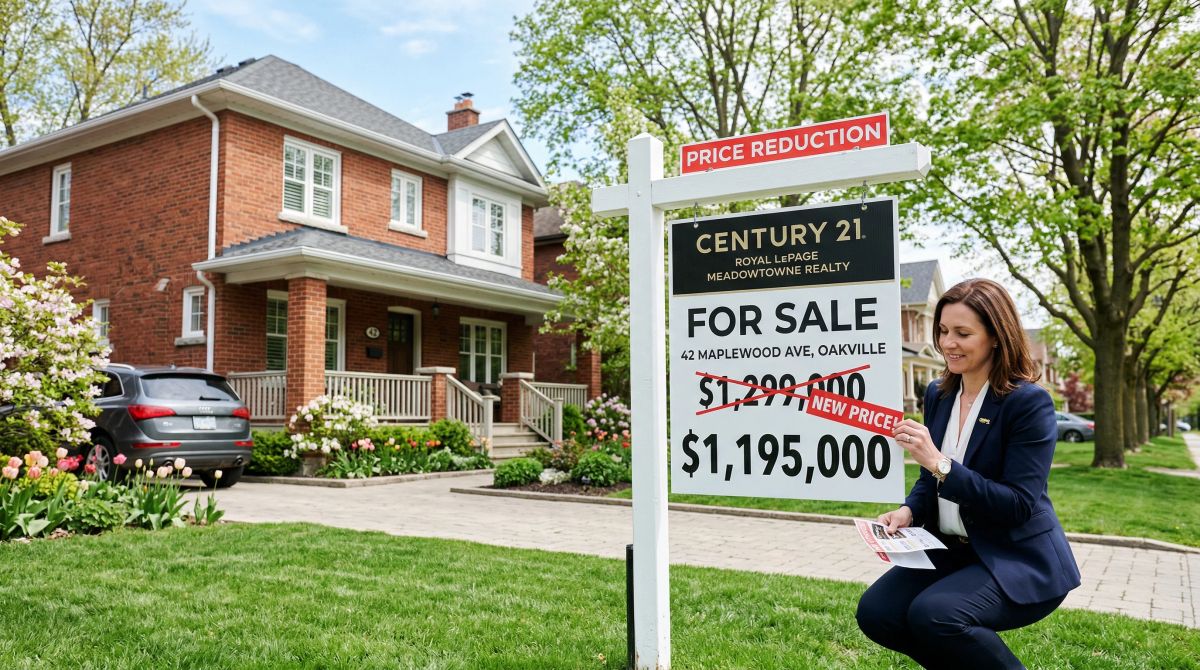
Ontario home prices are down 4-8% and days on market are stretching past 50. Here's how sellers and their agents should approach pricing in spring 2026.
The Old Playbook Is Dead
For years, pricing strategy in Ontario real estate was almost an afterthought. List slightly under market value, hold for offers, let the bidding wars do the work. That playbook generated record prices in 2021 and 2022.
In spring 2026, it will get your listing stale in two weeks.
Ontario home prices are down 4.8% year-over-year nationally, with the GTA averaging 7-8% declines. Days on market in Toronto have stretched past 50. Over 151,850 properties were listed for sale across Canada at the end of February -- and that number is climbing as spring inventory hits the market.
For agents advising sellers, pricing strategy has become the most critical conversation in the listing presentation. Get it wrong, and you're chasing the market down for months. Get it right, and you can still sell competitively -- even in a correction.
Why Pricing Is Harder Than It Used to Be
Three factors make spring 2026 pricing uniquely challenging:
1. Comparable sales are moving targets
In a declining market, comparable sales from three months ago are already outdated. A home that sold for $950,000 in December may have comparables closing at $910,000 today. Agents who price based on older comps are setting their clients up for disappointment.
Use the most recent 30-day comparables. If there are none in the immediate area, expand geographically rather than going back further in time. Time is a bigger distortion factor than location in a correction.
2. The HST rebate creates a pricing wedge
As of today, new construction homes under $1 million come with up to $130,000 in HST savings. That means a $900,000 new-build townhouse effectively costs the buyer ~$783,000 after the rebate. A resale townhouse listed at $900,000 in the same neighbourhood is now at a massive competitive disadvantage.
Sellers of resale properties -- especially in areas with new construction competition -- need to price with this reality in mind. The new-build alternative just got $130,000 cheaper.
3. Buyers are more analytical than ever
CREA noted that activity was "particularly slow" in the stretch of Ontario between Windsor and Toronto in February. Buyers aren't acting impulsively. They're comparing mortgage rates, running affordability calculators, studying neighbourhood-level data, and waiting for prices to stabilize.
In this environment, an overpriced listing doesn't just sit -- it actively repels buyers who interpret stale listings as a signal that the seller isn't serious.
The Five-Point Pricing Framework
Here's how top-performing Ontario agents are approaching pricing conversations in spring 2026:
1. Lead with absorption rate, not aspirational pricing
Before discussing a price, show the seller the absorption rate for their property type and area. How many similar homes sold in the last 30 days? How many are currently listed? If there are 40 active listings and 6 sales per month, that's 6.7 months of supply -- deep buyer's market territory.
Absorption rate makes the pricing conversation evidence-based rather than emotional.
2. Price to the market, not to the mortgage
Many sellers anchor to what they "need" from the sale -- typically the amount required to pay off their mortgage and cover their next purchase. But the market doesn't care about your mortgage balance.
If comparable sales show $850,000 and the seller needs $900,000 to make their numbers work, the answer isn't to list at $900,000 and hope. The answer is an honest conversation about whether this is the right time to sell, or whether waiting (and potentially facing further decline) is the better option.
3. Use the "two-week test"
The first two weeks on market generate the most buyer attention. If a listing hasn't received at least 3-5 showings and a reasonable offer within 14 days, it's very likely overpriced for current conditions.
Build a price reduction strategy into the listing agreement upfront. If the property hasn't attracted serious interest by day 14, agree to a 3-5% price adjustment. Waiting until day 45 to reduce means you've already lost the initial buyer pool.
4. Don't list below market hoping for bidding wars
The 2021 strategy of listing 10-15% below value to trigger a bidding frenzy backfires in a buyer's market. Buyers in 2026 see the low price and either assume something's wrong with the property, or submit an offer at the listed price expecting it to be accepted. You end up selling for less than fair market value.
Price at or slightly below current market value. Not 2022 value. Not the neighbour's sale from last summer. Current, verified comparable data.
5. Address the new-build competition explicitly
If your listing competes with new construction in the area, acknowledge the HST rebate in your pricing strategy. A resale home has advantages (immediate possession, established neighbourhood, no construction risk), but those advantages have a quantifiable value. If the new-build alternative is effectively $100,000+ cheaper after the rebate, the resale listing needs to be priced accordingly or positioned with clear differentiators.
Managing Seller Expectations
The hardest part of a listing agent's job in 2026 isn't finding buyers -- it's having honest conversations with sellers who still think their home is worth what it was in 2022.
Data helps. Show them:
- The price trajectory over 6, 12, and 24 months for their property type and area
- Active competition (how many similar homes are listed right now)
- Days on market trends (median and average for their segment)
- The cost of overpricing -- mortgage carrying costs for every extra month the property sits
A seller paying $3,500/month in mortgage costs who overprices by $30,000 and sits for three extra months has spent $10,500 in carrying costs plus lost time and missed opportunities. The math almost always favours pricing right from the start.
The Bottom Line for Spring 2026
Pricing is the single most important factor in determining whether a listing sells or sits. In a market where buyers have options, time, and data on their side, the agents who win listings aren't the ones who promise the highest price -- they're the ones who deliver realistic pricing backed by evidence, sell the property within a reasonable timeframe, and save their clients from the slow bleed of an overpriced listing in a declining market.
The market has shifted. Your pricing strategy needs to shift with it.

Written by
Frank Lee
Market news and data explainers
Market news and data explainers. Writes from public releases (TRREB, CMHC, StatCan, BoC) with original analysis for Ontario / GTA readers.
View all articles by Frank →

