
U.S. Tariffs Threaten to Erase Ontario's HST Savings as Lumber Duties Hit 40% and Steel Faces 25%
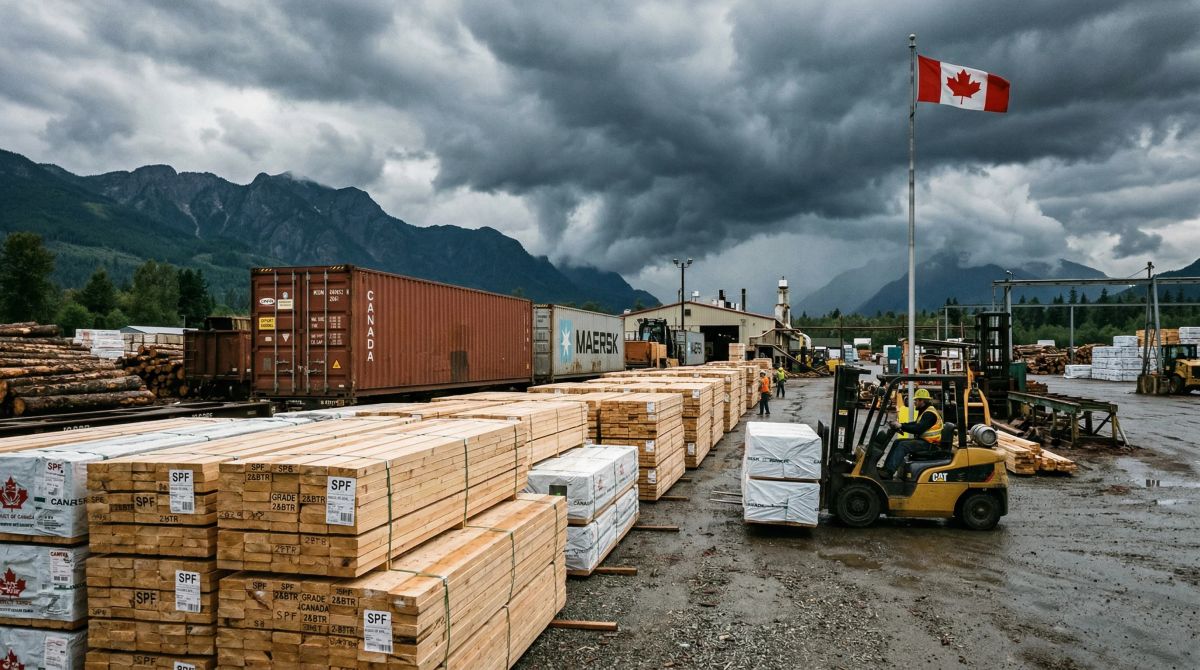
Lumber tariffs at 40%, steel at 25%, and retaliatory duties on U.S. building materials could add $20,000+ to Ontario new-home costs just as the HST rebate launches.
The Rebate Gives, the Tariffs Could Take Away
Ontario's $130,000 HST rebate went live yesterday. Today, the construction industry is grappling with a reality that could eat into those savings before buyers ever see them: U.S.-Canada tariffs are pushing building material costs sharply higher, and the worst may not be over.
Lumber tariffs on Canadian softwood entering the U.S. have climbed to nearly 40% (25% tariff plus the existing 14.5% duty). Steel and aluminum face a flat 25% global tariff. And Canada's retaliatory tariffs are adding costs to U.S.-sourced construction materials flowing back into Canadian builds -- everything from structural steel I-beams to windows, shingles, cement, and kitchen appliances.
The Canadian Home Builders' Association (CHBA) warned that the effect on Canadian residential construction "has the potential to be very significant," with costs varying by region and project type.
What's Actually Getting More Expensive
The tariff picture is layered and messy. Here's a simplified breakdown of what Ontario builders are dealing with:
| Material | Tariff Impact | Canada's Role |
|---|---|---|
| Softwood lumber | ~40% total duty on Canadian lumber entering U.S. (25% tariff + 14.5% existing duty) | Canada supplies ~85% of U.S. softwood imports. Redirected supply could lower Canadian prices -- or not, if mills struggle. |
| Steel (structural, rebar) | 25% U.S. tariff on all steel imports; Canadian retaliatory tariffs on U.S. steel products | Canada imported $7.5B USD in steel products from the U.S. in 2024. Many Canadian builders rely on U.S.-processed steel. |
| Aluminum | 25% U.S. tariff; Canada accounts for 50% of U.S. aluminum imports | Canadian retaliatory tariffs on U.S. aluminum products affect builders sourcing from integrated supply chains. |
| Windows, shingles, cement | Listed on Canada's proposed retaliatory tariff list | Many of these products come from U.S. manufacturers and face 25% retaliatory duties. |
| Appliances | Some U.S. appliances face Canadian retaliatory tariffs | Kitchen and bathroom fixtures sourced from the U.S. are getting more expensive. |
The "tariffed twice" problem makes things worse. Integrated North American supply chains mean materials often cross the border multiple times during manufacturing. A steel component might be mined in Canada, processed in the U.S., formed into a product, and shipped back to Canada -- getting tariffed at each crossing. An RBC analysis found this layering effect could amplify real costs well beyond the headline tariff rates.
The Cost to Ontario Home Buyers
The Canadian Chamber of Commerce estimates that U.S. tariffs could add approximately US$14,000 to the cost of building a U.S. home by 2027. The impact on Canadian builds is harder to quantify because it depends on which retaliatory tariffs Canada imposes and how supply chains adjust.
CHBA CEO Kevin Lee noted that while the U.S. tariffs themselves will have a "muted effect" on Canadian construction costs directly, the retaliatory tariffs and broader economic damage are the real concern. Projects are being shelved due to cost uncertainty.
"We're already behind in catching up on supply. This will make it worse," said Michael Brooks, CEO of the Real Property Association of Canada.
Canada's Housing Minister Nathaniel Erskine-Smith acknowledged the tension: building more homes and retaliating with tariffs "are at odds with one another."
The Silver Lining for Canadian Lumber
There's one counterintuitive possibility: Canadian lumber prices could actually fall domestically. With U.S. market access becoming less profitable due to 40% duties, Canadian producers are increasingly redirecting supply to domestic and European markets. If enough lumber stays in Canada, supply could push domestic lumber prices down -- which would benefit Canadian builders.
But this isn't guaranteed. Canadian sawmill capacity has been declining, particularly in British Columbia where the mountain pine beetle devastated forests. Weak global demand and low mill utilization rates mean producers may cut production rather than sell at lower prices.
Ontario's Housing Starts Were Finally Recovering
The timing is particularly frustrating. CMHC data showed Ontario housing starts increased 17% year-over-year in February, the second consecutive month of improvement. Over the first two months of 2026, Ontario reported a 14% increase compared to the same period in 2025 -- substantially above the national average of 5%.
That nascent recovery is now at risk. The Ontario Home Builders' Association warned that prolonged uncertainty could force builders to pause projects. "If there are tariffs that are hitting those [key construction materials], it's just going to continue to drive the costs up," said CEO Scott Andison. "If this threat goes on for too long, builders will have to stop projects until costs become more certain."
What This Means for the HST Rebate's Impact
The HST rebate saves buyers up to $130,000 on new homes under $1 million. But if tariff-driven construction cost increases add $15,000-$25,000 per unit (industry estimates vary), a meaningful portion of that savings could be absorbed by higher builder pricing.
The optimistic scenario: builders eat some of the cost increase to stay competitive in a market with 27 months of inventory, and the HST rebate still delivers net savings to buyers.
The pessimistic scenario: construction costs rise enough to push new-home pricing higher, offsetting a significant chunk of the rebate and further discouraging housing starts.
The government projected the rebate would trigger 8,000 additional housing starts and create 21,000 jobs. Whether those numbers hold depends not just on buyer demand, but on whether builders can actually deliver homes at prices that work -- and right now, the tariff uncertainty is making that calculation harder by the week.
For buyers, the advice hasn't changed: the HST rebate is real and valuable. But pay attention to what builders are doing with their pricing over the coming months. If list prices start creeping up, the tariff effect is already being passed through.

Written by
Frank Lee
Market news and data explainers
Market news and data explainers. Writes from public releases (TRREB, CMHC, StatCan, BoC) with original analysis for Ontario / GTA readers.
View all articles by Frank →

