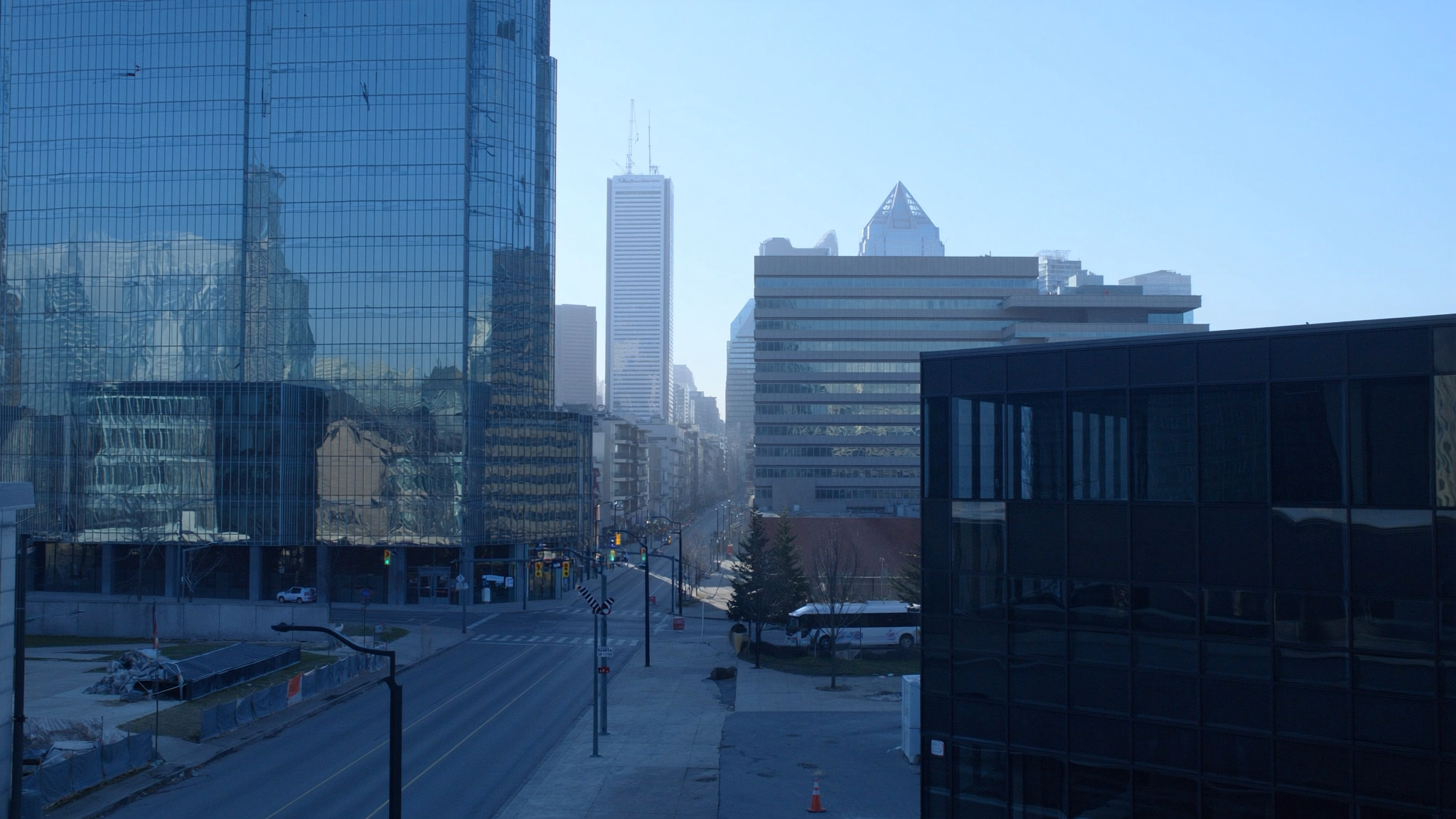
The 6 Best GTA Suburbs for First-Time Home Buyers in 2026
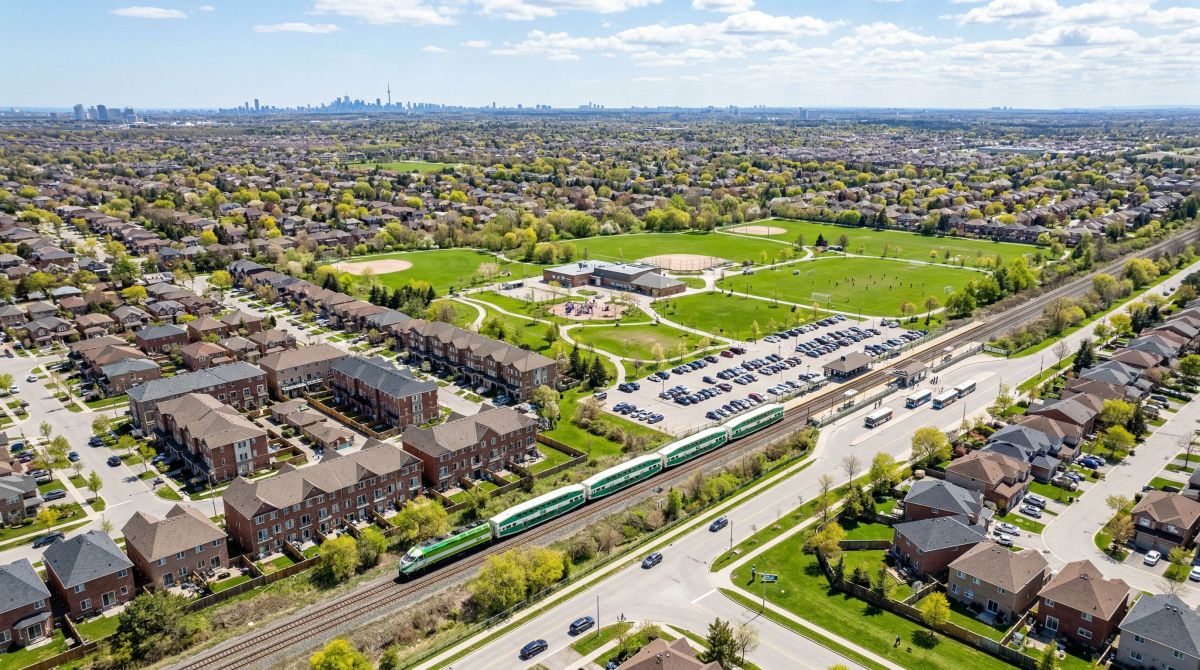
From Ajax's waterfront affordability to Vaughan's subway-connected condos, here are the 6 best GTA suburbs for first-time home buyers to consider in 2026.
Finding Your Entry Point Into the GTA Market
Buying your first home in the Greater Toronto Area in 2026 isn't easy — but it's more achievable than it's been in years. The GTA benchmark home price sat at $938,800 in February 2026, down 7.9% year-over-year, according to WOWA. Condo prices have fallen nearly 10% annually, and inventory has climbed. That's not a bad market for a first-time buyer who's done their homework.
The real question isn't whether to buy. It's where. Toronto proper has priced most first-timers out of everything but a one-bedroom condo. But the suburbs surrounding the city — with GO Train connections, new development pipelines, and lower price points — still offer genuine opportunities. You just have to know which ones make sense for your situation.
The best GTA suburbs for first-time buyers in 2026 share a few common traits: entry-level price points on condos and townhomes, reliable transit access to downtown Toronto, strong long-term appreciation potential, and the kind of infrastructure investment that signals a community isn't standing still. Here are six that consistently stand out.
1. Markham — Best for Long-Term Value and Stability
Markham is the choice for first-time buyers who are already thinking about their second and third home before they've even signed on their first. This city consistently ranks as one of the safest in Canada, with strong schools, a diverse job market across tech, finance, and healthcare, and well-planned communities that tend to hold value even when broader markets wobble.
Average detached home prices in Markham hover around $1.5 million — far out of first-timer reach. But that's not the entry point. Condos and townhomes in Markham's suburban pockets offer significantly lower price points, and the key is knowing which pockets to target.
Cornell is the standout neighbourhood for new buyers. It's home to some of Markham's newest townhome communities, sits adjacent to the Markham Stouffville Hospital, and is well-serviced by transit. Greensborough gives buyers GO Train access along with a quieter, family-oriented feel. Markham Village — one of the older parts of the city — has condos and older townhomes at lower prices than newer developments, which suits buyers willing to trade newness for affordability.
Transit access is a real strength: the GO Train stops at Mount Joy, Unionville, and Markham stations, and the city has quick highway access via 404 and 407. For buyers who don't mind a 45-minute commute in exchange for a neighbourhood they'll genuinely want to stay in for ten-plus years, Markham is hard to argue against.
Best entry-level options: Condos and townhomes in Cornell, Greensborough, and Markham Village
Transit: GO Train (Mount Joy, Unionville, Markham stations), Highways 404 and 407
Best for: Buyers planning to stay long-term and build equity
2. Ajax — Most Affordable with GO Access
If price-per-square-foot is your primary filter, Ajax deserves a serious look. It consistently sits among the most affordable municipalities in the GTA with direct GO Train access to downtown Toronto — a combination that's increasingly rare as surrounding areas appreciate.
The median sale price in Ajax's spring 2026 market was approximately $850,000, with detached homes making up the bulk of transactions. But condos, stacked townhomes, and semis still offer entry points below that figure — and below what buyers would pay for equivalent space in Markham or Vaughan.
Ajax also has something that gets overlooked in pure affordability comparisons: a waterfront. Lake Ontario parks, trails along the shoreline, and a community feel that doesn't read as pure suburban sprawl. There's a growing number of new developments moving in, which bodes well for long-term appreciation as more buyers get priced out of Durham Region's pricier pockets to the west.
The GO commute to Union Station is direct and reliable — Ajax sits on the Lakeshore East line, which runs frequently during peak hours. For young professionals who want space without heading too far east, this is a compelling trade-off.
Median home price (Spring 2026): ~$850,000
Transit: Direct GO Train to downtown Toronto (Lakeshore East line)
Best for: First-time buyers who want affordability and commutability
3. Pickering — GO Access Plus Waterfront Upside
Pickering sits right next door to Ajax and often gets overlooked in favour of its neighbour, but the case for Pickering in 2026 is strong — particularly for buyers thinking about appreciation potential as much as immediate affordability.
The Pickering GO Station offers fast downtown access on the Lakeshore East corridor, and the city has been investing heavily in its waterfront and downtown core. The ongoing redevelopment of Pickering's lakefront is exactly the type of long-term infrastructure story that tends to translate into price appreciation over a five-to-ten-year horizon. Buyers who get in before that transformation is complete historically do well.
Entry-level buyers should focus on condos and stacked townhomes, where prices remain lower than comparable stock in York Region to the north. Pickering is particularly attractive for buyers thinking about rental income potential down the road — strong transit access and lakefront lifestyle appeal to renters as much as owners.
The upcoming expansion of the Pickering area, including planned mixed-use developments near the GO station, signals a community with serious growth potential baked in. It's not the cheapest suburb on this list, but the future upside case is one of the strongest.
Transit: Pickering GO Station (Lakeshore East line), Highway 401
Best for: Commuters who want long-term appreciation upside and future resale or rental income
4. Vaughan — Subway Access and Urban Living Outside Toronto
Vaughan is the only suburb on this list with direct TTC subway access into Toronto, and that distinction matters enormously when you're doing the math on long-term resale value and rental demand.
The Vaughan Metropolitan Centre — anchored by the Vaughan subway station on Line 1 — has become a genuine urban hub outside Toronto proper. High-rise condos near the station cater exactly to first-time buyers who want a city lifestyle without city prices. The strong rental demand in the area, driven in part by proximity to York University and the VMC employment hub, also gives buyers a credible fallback option if circumstances change and they need to generate income from the property.
Affordability in Vaughan is rated medium-to-high relative to other GTA suburbs — you're not getting Ajax prices here. But what you're paying for is the highest transit infrastructure of any suburb on this list, and transit access has a consistent, well-documented relationship with property value appreciation over time. Condos near the VMC subway station in particular have held value well compared to the broader condo market correction.
For first-time buyers who genuinely don't want to give up the convenience of subway access — and who have some flexibility on price — Vaughan offers the closest thing to an urban lifestyle outside the 416 area code.
Best areas to consider: Vaughan Metropolitan Centre, Highway 7 corridor, near subway stations
Transit: TTC subway (Line 1 extension), Highway 400
Best for: Buyers who want urban amenities and transit access outside Toronto
5. Milton — New Builds and Room to Grow
Milton sits at the western edge of the GTA, and that geographic position is both its strength and its weakness. The strength: it's still meaningfully more affordable than Mississauga to the east, and the new construction stock is modern, well-built, and family-oriented. The weakness: the GO Train commute to downtown Toronto runs longer than most other suburbs on this list, and that commute time has historically kept Milton priced lower relative to its fundamentals.
But Milton's expanding GO Train service is worth watching. As service frequency improves, commute times shrink — and with them, one of the primary objections that has kept a lid on Milton prices. Buyers who get in ahead of significant transit improvements have historically benefited from the repricing that follows.
For first-time buyers open to a longer commute in exchange for newer construction, more space, and lower prices, Milton's townhome market offers genuine value. The family-friendly neighbourhoods are well-designed, and Milton is one of the fastest-growing municipalities in Ontario — the kind of growth that generally supports long-term price appreciation.
Transit: Expanding GO Train service (Milton line)
Best for: Buyers who prioritize new construction, more space, and lower prices over commute time
6. Barrie — Townhouse Value and Lake Simcoe Lifestyle
Barrie isn't technically inside the GTA, but it belongs on this list for first-time buyers willing to stretch their geographic thinking a little. The numbers are hard to ignore: Barrie's townhouse market saw average prices fall year-over-year to approximately $548,100 as of early 2026, according to Zoocasa — the lowest entry point of any community on this list with meaningful transit connectivity to Toronto.
That correction in the townhouse market, combined with the ongoing expansion of the Barrie GO Line corridor and the opening of the Allandale Transit Terminal in 2025, makes Barrie a genuinely different kind of opportunity. You can own a townhouse for well under $600,000, live on the shores of Lake Simcoe, and have a credible transit connection to Toronto — not fast, but real.
Barrie suits a specific buyer profile: someone who has done the mental math and decided that maximizing space and lifestyle at an affordable price point matters more than minimizing commute time. For remote or hybrid workers who only need to be in Toronto twice a week, Barrie's numbers look very different than they do for a daily commuter.
The city has real lifestyle appeal — Centennial Park, Johnson's Beach, and a genuine downtown core that has been growing steadily. It's not a dormitory suburb; it's an actual city with its own economy and culture, which gives it more long-term stability than purely commuter-dependent communities.
Average townhouse price (2026): ~$548,100
Transit: Barrie GO Line (expanding), Allandale Transit Terminal
Best for: Remote/hybrid workers who want maximum space and lifestyle at the lowest price point
Suburb Comparison at a Glance
Here's how all six stack up across the key metrics first-time buyers should be evaluating:
| Suburb | Best For | Affordability | Transit | Growth Potential |
|---|---|---|---|---|
| Markham | Long-term value | Medium-High | GO + Highways 404/407 | Very High |
| Ajax | Affordability + GO access | High | GO Lakeshore East | High |
| Pickering | Commuters + future appreciation | Medium | GO Lakeshore East | High |
| Vaughan | Urban lifestyle outside Toronto | Medium-High | TTC Subway (Line 1) | Very High |
| Milton | New builds, family-friendly | High | GO Milton line (expanding) | Medium |
| Barrie | Maximum space at lowest price | Very High | GO Barrie line (expanding) | Medium-High |
What to Look For When Buying in the Suburbs
Factor in total commute costs, not just transit availability. A GO pass from Barrie to Union Station costs significantly more annually than a TTC monthly pass from Scarborough. Model the full cost of commuting — passes, parking, time — when comparing options. Sometimes the "cheaper" suburb costs more to live in once you run the full numbers.
Check the development pipeline before you buy. New development near your property generally supports long-term value, but the type of development matters. A new hospital or transit hub is a positive catalyst. A large wave of new condo towers entering a slow-absorption market can pressure prices downward. Request information from local planning departments or look at municipal official plans — the data is public and genuinely predictive.
Think about rental potential from day one. Even if you plan to owner-occupy indefinitely, buying in a location with strong rental demand gives you options. Life changes, circumstances change, and a property that could generate income if needed is a form of financial flexibility that costs you nothing at the time of purchase.
Don't just compare purchase prices — compare value. A $700,000 townhome in a suburb with excellent schools, improving transit, and a growing employment base will outperform a $550,000 unit in a static community over a ten-year hold. The gap between affordability and value is where most first-time buyers leave money on the table.
The GTA's 2026 market — with prices down from their peaks, inventory up, and more negotiating room than buyers have had since before the pandemic boom — is genuinely one of the more favourable environments for first-time buyers in recent memory. The suburbs on this list aren't consolation prizes for buyers who couldn't afford Toronto. They're legitimate long-term investments with their own compelling stories. The key is matching the right suburb to your actual lifestyle, commute tolerance, and financial position.

Written by
Sara Shao
Contributing writer
Contributing writer on buyer, career, and market explainers published on RealEstateHQ.
View all articles by Sara →