
How to Save for a Down Payment in Ontario: A Step-by-Step Strategy for First-Time Buyers in 2026
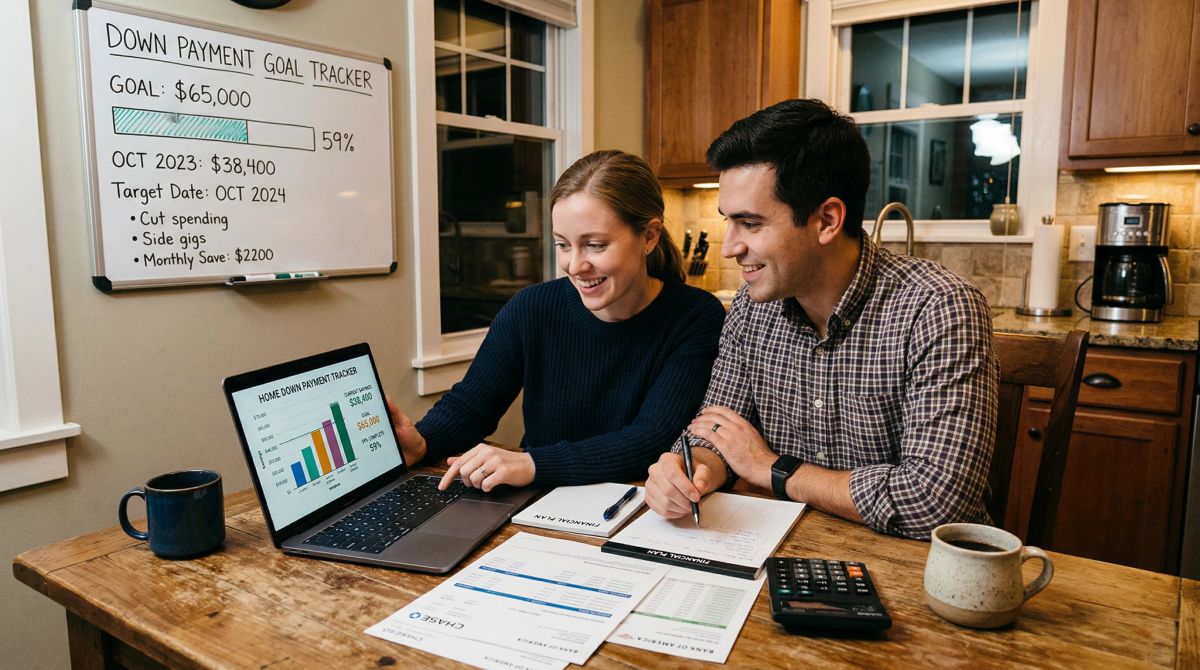
Saving $50K-$90K for a GTA down payment feels impossible. Here's a realistic, tax-optimized strategy using FHSA, RRSP, and TFSA to get there faster than you think.
The Number That Keeps You Up at Night
You want to buy your first home in the GTA. You know roughly what you can afford. And then you calculate the down payment you need, and everything feels impossible.
For a $700,000 townhouse in the 905: $45,000 minimum (5% on first $500K, 10% on remaining $200K). For a $500,000 condo: $25,000. For an $850,000 semi-detached: $60,000. And that's before $15,000-$22,000 in closing costs.
The gap between where you are and where you need to be can feel overwhelming. But here's what most first-time buyers don't realize: the Canadian government has created three powerful savings vehicles that, when used together, can get you to your down payment goal significantly faster than a basic savings account. The key is understanding how to stack them.
The Three Accounts That Change Everything
1. First Home Savings Account (FHSA) -- Your Best Tool
The FHSA is, frankly, the best savings account the Canadian government has ever created for homebuyers. It combines the tax benefits of an RRSP and a TFSA into one vehicle:
- Contributions are tax-deductible (like an RRSP). If you contribute $8,000 and your marginal tax rate is 30%, you save $2,400 in taxes that year.
- Withdrawals for a qualifying home purchase are tax-free (like a TFSA). You don't pay tax when you take the money out for your home.
- Annual limit: $8,000 per year
- Lifetime limit: $40,000
- Carry forward: Unused contribution room carries forward (up to $8,000), so if you miss a year, you can catch up
- Investment options: Same as RRSP -- GICs, stocks, bonds, mutual funds, ETFs
The power of the FHSA comes from the tax deduction. A $8,000 contribution at a 30% marginal rate generates a $2,400 tax refund. If you redirect that refund back into the FHSA (or another savings vehicle), you're effectively saving $10,400 from $8,000 of your own cash.
| Year | FHSA Contribution | Tax Refund (est. 30%) | Cumulative FHSA Balance |
|---|---|---|---|
| Year 1 | $8,000 | $2,400 | $8,000 + growth |
| Year 2 | $8,000 | $2,400 | $16,000 + growth |
| Year 3 | $8,000 | $2,400 | $24,000 + growth |
| Year 4 | $8,000 | $2,400 | $32,000 + growth |
| Year 5 | $8,000 | $2,400 | $40,000 + growth |
After 5 years: $40,000 in tax-free savings, plus $12,000 cumulative in tax refunds that you can invest elsewhere, plus any investment growth inside the account. If you invested the FHSA in a balanced portfolio earning 5% annually, the balance after 5 years would be approximately $44,200.
Critical: Open the FHSA now, even if you're not ready to buy. The contribution room starts accumulating when you open the account. If you wait two years to open it, you lose two years of contribution room that you can never get back.
2. RRSP Home Buyers' Plan (HBP)
The HBP lets you withdraw up to $60,000 from your RRSP tax-free to buy a qualifying first home. For a couple, that's $120,000 combined.
The catch: you have to repay the withdrawal over 15 years, starting the second year after the withdrawal. If you don't repay, the missed amount is added to your taxable income for that year.
The repayment schedule is 1/15th of the total withdrawal per year. For a $60,000 withdrawal: $4,000/year must be repaid to your RRSP. That's $333/month -- manageable for most homeowners, but it's a 15-year commitment.
The RRSP contribution also generates a tax deduction. If you contribute $20,000 to your RRSP at a 30% marginal rate, you get a $6,000 refund. Then you withdraw the $20,000 tax-free for your down payment through the HBP. The $6,000 refund is yours to keep.
3. Tax-Free Savings Account (TFSA)
The TFSA doesn't give you a tax deduction on contributions, but all growth and withdrawals are completely tax-free. The 2026 contribution limit is $7,000 per year (cumulative lifetime room since 2009 is $102,000 if you've never contributed).
Use the TFSA as your flexible savings layer:
- Park your closing cost fund here (separate from your down payment)
- Use it for short-term savings that you might need access to before purchasing
- Invest in high-interest savings ETFs or short-term GICs for stability
The Optimal Stacking Strategy
Here's how a first-time buyer earning $75,000/year should prioritize:
- Max the FHSA first ($8,000/year). Double tax benefit (deductible + tax-free growth) makes this the highest-returning savings vehicle available.
- Contribute to RRSP for HBP ($5,000-$15,000/year). Get the tax deduction now, withdraw tax-free for your down payment later.
- Use TFSA for closing costs and emergency fund ($3,000-$7,000/year). Flexible, tax-free, accessible.
- Redirect all tax refunds into savings. Don't spend the refund. Contribute it to your TFSA or invest it.
Three-Year Savings Example: Couple Earning $150,000 Combined
| Account | Year 1 | Year 2 | Year 3 | Total (3 years) |
|---|---|---|---|---|
| FHSA (each) | $16,000 | $16,000 | $8,000 | $40,000 |
| RRSP/HBP (each) | $20,000 | $20,000 | $20,000 | $60,000 |
| TFSA (closing costs) | $10,000 | $10,000 | $10,000 | $30,000 |
| Tax refunds (reinvested) | ~$10,800 | ~$10,800 | ~$8,400 | ~$30,000 |
| Total available | ~$160,000 |
In three years, a disciplined couple could accumulate $160,000 -- enough for a 20% down payment on an $800,000 home with closing costs covered. The tax refunds alone contribute roughly $30,000 to the total.
This requires significant savings discipline -- roughly $3,700/month combined toward savings. For a couple earning $150,000, that's about 30% of gross income directed toward the down payment goal. It's aggressive but achievable, especially if you're currently renting at below-market rates or have minimal other debt.
Where to Invest Your Down Payment Savings
The investment strategy depends entirely on your timeline:
| Timeline to Purchase | Recommended Investments | Expected Return |
|---|---|---|
| Under 1 year | High-interest savings account, GICs, money market ETFs | 3-4% |
| 1-2 years | Short-term GICs, bond ETFs, balanced low-risk funds | 3.5-5% |
| 2-3 years | Balanced ETFs (60/40 stock/bond), GIC ladder | 4-6% |
| 3-5 years | Growth-tilted balanced ETFs (70/30 or 80/20) | 5-7% |
The cardinal rule: never invest money you need within 12 months in anything that can lose value. Your down payment is not the place for individual stocks, crypto, or aggressive growth portfolios. A 20% market correction the month before your purchase could wipe out years of savings.
Automating Your Savings
The most reliable way to reach your goal is to automate contributions so the money leaves your account before you can spend it.
- Set up automatic transfers on payday to your FHSA, RRSP, and TFSA
- Calculate your monthly target and split it across the three accounts based on the priority order above
- When you receive your tax refund, transfer it immediately to your TFSA or FHSA (if room remains)
- Review quarterly -- are you on track? Adjust contribution amounts if needed
Government Programs Beyond the Savings Accounts
Once you've saved your down payment, additional programs reduce your costs further:
| Program | Benefit | Eligibility |
|---|---|---|
| Ontario LTT First-Time Buyer Rebate | Up to $4,000 | Never owned a home worldwide |
| Toronto MLTT Rebate | Up to $4,475 | First-time buyer in Toronto |
| First-Time Home Buyers' Tax Credit | $1,500 federal credit | First-time buyer, filed on tax return |
| HST Rebate (new construction only) | Up to $130,000 | Purchase agreement April 2026-March 2027 |
| 30-year amortization | Lower monthly payments | First-time buyer, insured mortgage |
Common Down Payment Mistakes to Avoid
- Not opening the FHSA immediately. Every month you wait is contribution room you'll never get back. Open it today, even with a $100 initial deposit.
- Keeping savings in a basic bank account. A 0.05% savings account is costing you thousands in lost returns. At minimum, use a high-interest savings account (3.5-4.5% at online banks).
- Spending the tax refund. The refund is part of your down payment strategy, not a bonus. Redirect it immediately.
- Being too aggressive with investments close to purchase. If you're buying in 12 months, don't have your down payment in equities. A market dip could delay your purchase by years.
- Forgetting closing costs. Your down payment isn't the only cash needed. Budget $15,000-$22,000 for closing costs on top of the down payment, especially if buying in Toronto.
- Not communicating with your partner. If you're saving as a couple, both parties need to be committed to the savings rate. One person's impulse spending can derail the plan.
Your 12-Month Action Plan
- This week: Open an FHSA at your bank or brokerage. Make an initial contribution.
- This month: Set up automatic contributions to FHSA and RRSP on payday.
- Month 2: Open or fund a TFSA for closing costs. Start a separate "house fund" within it.
- Month 3: Review your investment strategy. Move any cash sitting in low-interest accounts to high-interest alternatives.
- Month 6: Mid-year check -- are you on track? Adjust if needed.
- Month 9: Start researching neighbourhoods and getting pre-approved to know your real number.
- Month 12: Assess whether you've hit your target. If yes, start actively shopping. If not, recalibrate the timeline.
The down payment mountain feels insurmountable when you look at the summit from the base. But the combination of FHSA, HBP, TFSA, and tax refund reinvestment creates a path that's faster than most buyers expect. A couple saving $3,500/month for three years, using all available tax-advantaged accounts, can accumulate $150,000+. That's a 20% down payment on an $750,000 home.
Start today. Open the accounts. Automate the transfers. Let the system work.

Written by
Sara Shao
Contributing writer
Contributing writer on buyer, career, and market explainers published on RealEstateHQ.
View all articles by Sara →

