
Understanding Condo Fees in Ontario: What They Cover, How They Change, and When They're a Red Flag
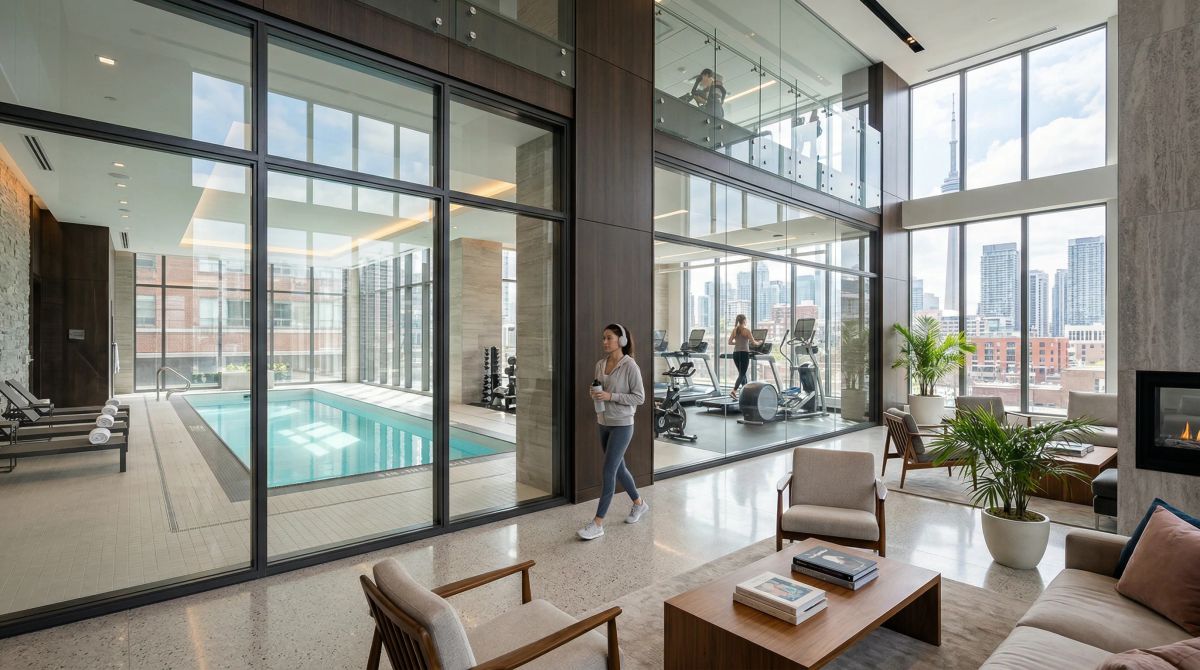
Ontario condo fees range from $350 to $1,200/month. Here's exactly what you're paying for, how to spot a building heading for trouble, and what's a fair fee.
The Second Mortgage Nobody Talks About
When Ontario buyers calculate what they can afford, most think about the mortgage payment, property taxes, and maybe insurance. What catches many first-time condo buyers off guard is the monthly maintenance fee -- a cost that can range from $350 for a small, no-frills building to $1,200+ for a full-amenity downtown tower, and that increases every single year.
Condo fees aren't optional. You can't negotiate them down or skip a month. They're a binding financial obligation that comes with every condo purchase, and they directly affect your quality of life, your monthly budget, and the long-term value of your investment.
In a market where Ontario condo prices have dropped 13% year-over-year and buyers have unprecedented choice, understanding condo fees isn't just helpful -- it's essential for making a smart purchase.
What Condo Fees Actually Pay For
Your monthly common expense fee covers the cost of operating and maintaining the building's shared spaces and systems. Here's a typical breakdown:
| Expense Category | Typical % of Total Fee | What It Covers |
|---|---|---|
| Reserve fund contribution | 20-30% | Long-term capital repairs (roof, elevator, windows, garage) |
| Building insurance | 10-15% | Property insurance for the building structure and common elements |
| Utilities (common areas) | 15-25% | Hallway lighting, elevator power, lobby heating/cooling, parking lot lights |
| Property management | 8-12% | Management company fees for day-to-day operations |
| Concierge/security | 10-20% | 24/7 front desk, security patrols (if applicable) |
| Maintenance and repairs | 10-15% | Common area cleaning, landscaping, minor repairs, snow removal |
| Amenities | 5-15% | Pool, gym, party room, rooftop terrace, co-working space |
| Administration | 3-5% | Legal, accounting, AGM costs, communications |
Important: condo fees typically do NOT include your unit's hydro (electricity), water/gas (varies by building -- some include it, others meter individually), or your personal contents insurance. Always verify what's included before buying.
What's a "Normal" Condo Fee in Ontario in 2026?
The industry rule of thumb is $0.60 to $0.90 per square foot per month. But the range is wide:
| Building Type | Typical Fee Range | What Drives the Cost |
|---|---|---|
| New condo (0-5 years), basic amenities | $350 - $500 | Lower maintenance needs, minimal reserve fund draws |
| New condo, full amenities (pool, gym, concierge) | $500 - $800 | Concierge and amenity operating costs drive fees higher |
| Mid-age condo (10-20 years) | $500 - $800 | Increasing maintenance, higher insurance, reserve fund catch-up |
| Older condo (20-30+ years) | $600 - $1,200+ | Major capital repairs (windows, roof, garage), higher insurance, aging systems |
| Freehold townhouse condo | $100 - $300 | Covers shared elements only (roads, landscaping, snow removal) |
A common mistake: assuming low fees mean a well-run building. Sometimes low fees mean the corporation is undercharging and will need a sudden large increase or special assessment to catch up. The status certificate's reserve fund study reveals whether fees are sustainable.
Why Condo Fees Go Up Every Year (and What's Normal)
Condo fee increases are a fact of life. Buildings age, costs rise, and the reserve fund needs consistent funding. Here's what to expect:
- Normal annual increase: 3-5%. This covers general inflation in operating costs, insurance premium increases, and reserve fund growth.
- Concerning annual increase: 6-8%. Suggests the building is experiencing cost pressures beyond normal inflation -- possibly deferred maintenance catching up, insurance spikes, or management inefficiency.
- Red flag annual increase: 10%+. This typically indicates a serious financial problem -- a critically underfunded reserve, a major unplanned repair, or insurance that's become dramatically more expensive.
When evaluating a condo purchase, ask for the fee history over the last 5 years. Consistent 3-4% annual increases suggest a well-managed building. Erratic or large increases suggest financial instability.
How Condo Fees Affect What You Can Afford
This is where many buyers get tripped up. Condo fees directly reduce how much mortgage you qualify for, because lenders include 50% of the condo fee in your Gross Debt Service (GDS) ratio calculation.
Example: a $500/month condo fee adds $250/month to your GDS calculation. That $250 reduces your mortgage qualification by roughly $40,000-$50,000.
| Monthly Condo Fee | Amount Added to GDS (50%) | Approx. Reduction in Mortgage Qualification |
|---|---|---|
| $350 | $175 | ~$28,000 |
| $500 | $250 | ~$40,000 |
| $700 | $350 | ~$56,000 |
| $900 | $450 | ~$72,000 |
| $1,100 | $550 | ~$88,000 |
This means that a condo with a $400,000 purchase price and $900/month fees could be harder to qualify for than a $450,000 condo with $400/month fees. Always calculate your total monthly cost (mortgage + fees + taxes + insurance) when comparing properties, not just the purchase price.
Special Assessments: The Cost Nobody Budgets For
A special assessment is a one-time charge levied when the reserve fund can't cover a major expense. Common triggers in Ontario condos:
- Window replacement: $15,000 - $40,000 per unit for a full building window replacement
- Parking garage waterproofing: $10,000 - $30,000 per unit
- Elevator modernization: $5,000 - $15,000 per unit
- Roof replacement: $5,000 - $15,000 per unit
- Pipe replacement (older buildings): $10,000 - $25,000 per unit
The status certificate reveals whether special assessments have been levied or are anticipated. If you're buying in a 15-25 year old building, pay close attention to the reserve fund study's capital expenditure schedule for the next 5-10 years. That's where your future special assessments are hiding.
New vs. Old Buildings: The Fee Trajectory
New condos often advertise attractively low fees -- $400-$500 for a one-bedroom. But those fees are set by the developer, who has an incentive to keep them low to attract buyers. In the first 1-3 years after the building is registered as a corporation, fees often increase 10-20% as the board discovers the real operating costs.
The typical fee trajectory over a building's life:
- Years 1-3: Developer-set fees, often artificially low. Expect a jump once the corporation takes over budgeting.
- Years 3-10: Fees normalize. Annual increases of 3-5% as the building settles into operating routines.
- Years 10-15: First major capital items appear (HVAC replacement, elevator work, lobby renovation). Reserve fund adequacy becomes critical.
- Years 15-25: Major capital expenses (windows, garage, roof). If the reserve fund was underfunded, special assessments hit. Fees may jump 8-15% in a single year.
- Years 25+: Highest maintenance costs. Well-managed buildings with strong reserves handle this smoothly. Poorly managed buildings face cascading special assessments and declining property values.
Amenity Costs: What You're Actually Paying For
That pool, gym, rooftop terrace, and co-working space all cost money to maintain. Here's what they add to your monthly fees:
| Amenity | Estimated Monthly Cost per Unit | Notes |
|---|---|---|
| Pool | $50 - $100 | Highest cost amenity: maintenance, chemicals, heating, lifeguard |
| Gym | $20 - $40 | Equipment maintenance, cleaning, eventual replacement |
| Concierge (24/7) | $80 - $150 | Labour is the largest single cost in many buildings |
| Party room | $10 - $20 | Low cost, but some buildings charge rental fees on top |
| Rooftop terrace | $15 - $30 | Furniture, landscaping, weather damage repair |
| Co-working space | $10 - $25 | WiFi, furniture, cleaning |
If you never use the pool, you're still paying $50-$100/month for it. If you'd rather pay less and buy a gym membership separately, a building without a pool saves you money every month for the life of your ownership. Choose amenities you'll actually use.
The Condo Fee Comparison Checklist
When comparing two condos, use this framework:
- Calculate the per-square-foot fee for each unit. This normalizes for size differences. Under $0.70/sqft is low. $0.70-$0.90 is normal. Over $1.00 warrants investigation.
- Check what's included. Does the fee include water, gas, or hydro? A building that includes all utilities at $700/month may cost the same as a building at $500/month where you pay $200/month in utilities separately.
- Review the fee increase history. Consistent, modest increases (3-4%) over 5 years suggest stability. Large or erratic increases suggest problems.
- Check the reserve fund study date and funding level. A well-funded reserve (meeting the study's recommended balance) means lower risk of special assessments.
- Assess the amenity-to-fee ratio. Are you paying premium fees for amenities you'll never use?
- Factor fees into your total monthly cost. A cheaper condo with high fees can cost more monthly than a pricier condo with low fees.
When Condo Fees Are a Deal-Breaker
Walk away if:
- Fees have increased more than 10% annually for 3+ consecutive years
- The reserve fund is less than 50% of the recommended level
- A special assessment is pending or "anticipated" that would cost you $20,000+
- The building doesn't have a current reserve fund study (more than 3 years old)
- The total monthly cost (mortgage + fees + taxes) exceeds 35% of your gross income
Condo fees are the cost of shared ownership. They're not inherently good or bad -- they're a fact of condo life that you need to understand, budget for, and use as a decision-making tool. The buyers who get this right save themselves from nasty financial surprises. The ones who ignore it learn the expensive way.

Written by
Sara Shao
Contributing writer
Contributing writer on buyer, career, and market explainers published on RealEstateHQ.
View all articles by Sara →

