
How to Use Open Houses to Build Your Business as an Ontario Real Estate Agent
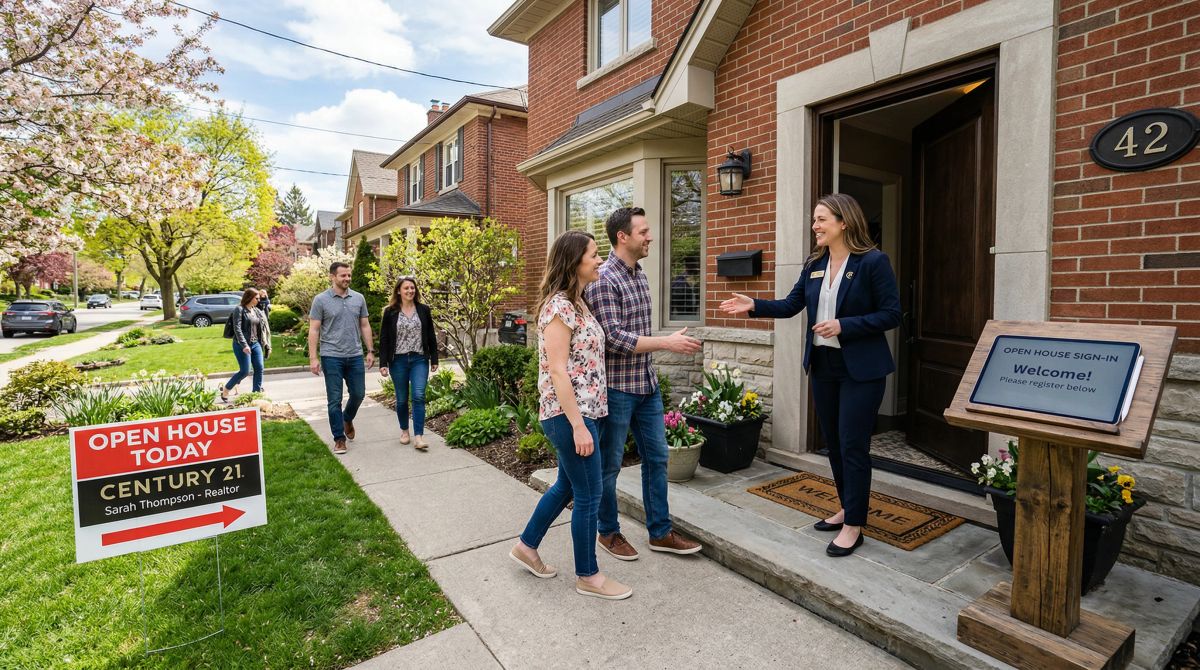
In a buyer's market, open houses aren't about selling that specific home -- they're about meeting active buyers who need an agent. Here's how to maximize every one.
The Open House Is a Lead Generation Machine (If You Use It Right)
Most Ontario agents think of open houses as a service to their seller -- a way to get foot traffic through the property and hopefully trigger an offer. In a hot market, that's exactly what they are. But in a buyer's market like spring 2026, the primary purpose of an open house shifts dramatically.
With GTA properties sitting 47 days on market and condos averaging even longer, the odds of selling a home at a single open house are low. The odds of meeting 5-15 active, unrepresented buyers who need an agent? Much higher.
The agents growing their business fastest in 2026 aren't using open houses to sell the listed property. They're using them to fill their CRM with qualified buyer contacts. Here's the complete playbook.
Before the Open House: Preparation That Pays
Choosing the right property
Not every listing makes a good open house. Look for properties that:
- Are in high-traffic neighbourhoods with good drive-by visibility
- Are priced at the entry point for the area (attracts the most first-time buyers)
- Show well (clean, staged, good light -- you want visitors to stay and talk)
- Don't have the listing agent present (some listing agents prefer to run their own open houses, limiting your opportunity)
If you don't have your own listings yet, offer to hold open houses for other agents in your brokerage. Most established agents are happy to have someone else handle the weekend open house while they focus on other activities. It's free for you and saves them time.
Marketing the open house
Don't rely solely on the MLS announcement. Drive traffic with:
- Social media posts: Announce 48 hours before with property photos and the date/time. Post a reminder the morning of.
- Neighbourhood signs: Place directional signs at key intersections within a 4-block radius (check your brokerage's sign policy and municipal bylaws)
- Targeted ads: A $50-$100 Facebook/Instagram ad targeting first-time buyers within 10 km of the property can generate meaningful additional traffic
- Email your database: "I'm hosting an open house this weekend at [address]. If you or anyone you know is curious about the [neighbourhood] market, come by!"
Setting up the space
- Arrive 30 minutes early to turn on all lights, open blinds, and set comfortable temperature
- Place your sign-in sheet (or tablet) at the entrance -- visible and easy to use
- Set out market reports, buyer guides, or neighbourhood comparison sheets as conversation starters
- Have your business cards easily accessible
- Consider light refreshments (coffee, water, cookies) -- people stay longer when they're comfortable
During the Open House: The Contact Collection System
The sign-in process
Your sign-in system is the single most important element of the open house. Every visitor's name, email, and phone number is a potential client. Use either:
- Digital sign-in (tablet or phone): Apps like Spacio, Curb Hero, or even a simple Google Form. Data goes directly into your CRM. Professional and efficient.
- Paper sign-in: A clean form with name, email, phone, and "Are you currently working with an agent?" as the key qualifying question. Less professional but still works.
The qualifying question matters enormously. Visitors who answer "No" to "Are you currently working with an agent?" are your direct leads. Visitors who answer "Yes" are still contacts -- their agent may not be performing, and they may come back to you later.
The conversation framework
Don't hover. Don't pitch. Let visitors explore on their own for 2-3 minutes, then approach naturally:
"Hi, welcome! Have you had a chance to look around? This is a great [feature of the home]. Are you looking in this neighbourhood specifically, or are you exploring a few different areas?"
That opening accomplishes three things: it's warm, it's relevant to the property, and it transitions naturally into a qualification conversation about their search.
Follow-up questions that reveal buyer intent:
- "How long have you been looking?" (Tells you urgency and engagement level)
- "What's on your must-have list?" (Tells you what to send them from your CRM later)
- "Have you been pre-approved yet?" (Tells you how serious they are and whether you can refer them to a mortgage broker)
- "What area are you most focused on?" (Tells you whether you can serve them or should refer them)
Keep conversations natural. You're building rapport, not conducting an interrogation. If someone doesn't want to chat, respect that -- but make sure they've signed in before they leave.
After the Open House: The Follow-Up That Converts
This is where most agents drop the ball. They collect 10 contacts at the open house and then... do nothing. Or they send a single generic email and never follow up again. The fortune is in the follow-up.
Within 2 hours of the open house ending
- Enter every contact into your CRM with tags: "Open House [date] [address]," buyer/seller, and any notes from your conversation
- Send a personalized text to each visitor: "Hi [Name], thanks for stopping by [address] today. Great chatting with you about your search in [area]. I found a couple other listings that might match what you described -- want me to send them over?"
Within 24 hours
- Send a follow-up email with 2-3 relevant listings based on what they told you at the open house. Personalize this -- reference your conversation specifically.
- For visitors who said they don't have an agent: "I'd love to help with your search. I specialize in [area/buyer type] and I'm happy to set up some private showings based on what you're looking for. Would Tuesday or Wednesday work?"
Within 7 days
- Add all open house contacts to your long-term nurture sequence (monthly market updates, relevant listings, helpful content)
- Make a phone call to the top 2-3 most engaged visitors -- the ones who asked the most questions, stayed the longest, or expressed clear intent
Ongoing
- Every open house contact stays in your CRM forever. Today's casual visitor is next year's client. The nurture system keeps your name in front of them until they're ready to act.
TRESA Compliance at Open Houses
Under TRESA Phase 2, buyer representation requirements apply at open houses too:
- You cannot provide buyer-specific advice or services to an unrepresented visitor without a signed BRA. General property information is fine; specific market advice, pricing guidance, or offer-related discussion requires representation.
- If a visitor expresses serious interest and wants to work with you, the BRA conversation should happen before you show them additional properties -- not at the open house itself.
- RECO's Information Guide should be available for visitors who ask about representation options.
- If the visitor's agent shows up, maintain professional courtesy and don't attempt to poach the client.
Open House Frequency: How Often Is Enough?
In the current market, the agents building the strongest buyer pipelines are holding open houses every weekend -- and some are doing two per weekend (Saturday and Sunday at different properties).
| Open Houses per Month | Expected Contacts Collected | Expected New Active Leads |
|---|---|---|
| 2 (every other weekend) | 15-25 | 2-4 |
| 4 (every weekend) | 30-50 | 5-8 |
| 8 (twice per weekend) | 50-80 | 8-15 |
An "active lead" is someone who responds to your follow-up, books a showing, or requests additional information. At a 2-3% conversion rate from contact to closed deal (over time), 50 contacts per month generates 1-2 closed deals annually just from open house leads alone -- on top of whatever else you're doing.
The Numbers Game: Why Consistency Wins
One open house is an event. Four per month is a system. Over 12 months, an agent holding weekly open houses collects 400-600 contacts. Those contacts, properly nurtured, become the foundation of a sustainable business.
In a market where 100,000+ potential buyers are sidelined in the GTA, the open house puts you in direct contact with the people who are actually out looking -- the early movers who'll transact first when confidence returns. Every contact you collect today is a potential commission in 2026 or 2027.
The work isn't glamorous. It's showing up on Saturday mornings, setting out signs, making small talk, and following up diligently. But the agents who do it consistently in a down market are the ones with full pipelines when the market turns.
And it will turn. It always does.

Written by
Rob Worthington
Contributing writer
Contributing writer on Ontario real estate topics featured across RealEstateHQ guides and industry pieces.
View all articles by Rob →

